
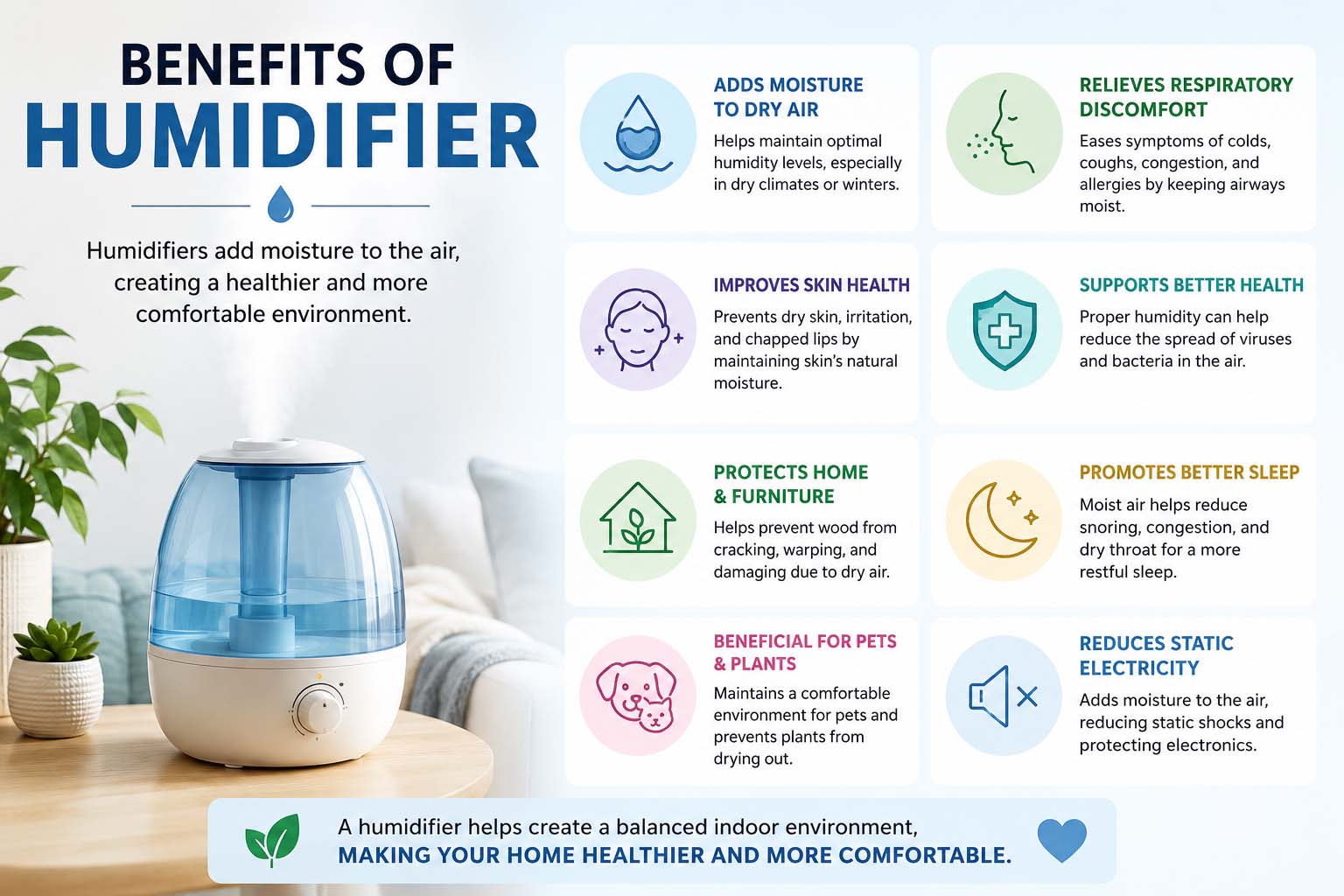
Humidifiers have become increasingly popular in homes, especially during dry weather and winter months. Many people use them to improve comfort, sleep quality, and overall wellness. Understanding the benefits of humidifier use can help people create a healthier indoor environment and reduce common dryness-related symptoms.
Dry indoor air can affect the skin, throat, nose, and respiratory system. In particular, heating systems, air conditioning, and low humidity levels often make these problems worse. A humidifier adds moisture back into the air, helping maintain balanced humidity levels inside the home.
What Is a Humidifier?
It releases water vapor or mist into indoor spaces to improve humidity.
There are several common types of humidifiers:
- Cool mist humidifiers
- Warm mist humidifiers
- Ultrasonic humidifiers
- Evaporative humidifiers
Each type works differently, but the goal remains the same: reducing dryness and improving indoor comfort.
Additionally, learning about the 10 benefits of snake plant may help you explore another topic related to indoor environments.
Common Symptoms of Dry Air
Dry indoor air can cause several uncomfortable symptoms.
Dry Skin
Low humidity often removes moisture from the skin, causing:
- Flaking
- Itching
- Redness
- Tightness
Dry Throat and Nose
People may experience:
- Sore throat
- Nasal irritation
- Nosebleeds
- Dry cough
Poor Sleep Quality
Dry air can irritate breathing passages and contribute to snoring or nighttime discomfort.
Eye Irritation
Some individuals develop dry or itchy eyes in low-humidity environments.
Benefits of a Humidifier
The benefits of a humidifier go beyond simple comfort. In fact, proper humidity levels can support overall wellness and indoor health.
Better Breathing Comfort
Humidifiers help keep nasal passages and airways moist.
This may reduce discomfort caused by:
- Dry air
- Seasonal weather changes
- Indoor heating systems
For this reason, moist air often feels more comfortable during colder months.
However, people experiencing respiratory symptoms may also find information about how to stop wheezing useful while seeking appropriate health guidance.
Reduced Dry Skin Problems
One of the biggest benefits of using a humidifier for dry skin is improved moisture retention.
Humidifiers may help reduce:
- Cracked skin
- Itching
- Skin tightness
- Rough patches
Therefore, people with naturally sensitive skin often notice greater comfort in properly humidified rooms.
Improved Indoor Comfort
Balanced humidity levels can make indoor spaces feel warmer and more comfortable during winter.
As a result, this may reduce dependence on excessive heating.
Support for Sleep Quality
Humidified air may reduce nighttime throat dryness and breathing irritation.
Many people report more comfortable sleep environments after adding a humidifier to their room.
Benefits of a Humidifier While Sleeping
Many individuals specifically search for the benefits of a humidifier while sleeping because nighttime dryness can affect rest and breathing.
Reduced Snoring
Dry air may irritate the throat and nasal passages, potentially increasing snoring.
Humidified air can help keep airways more comfortable overnight.
Better Throat Comfort
Sleeping with dry air exposure sometimes leads to waking up with a sore throat.
Therefore, humidifiers may help maintain throat moisture while sleeping.
Improved Sleep Environment
Comfortable humidity levels can create a more relaxing bedroom atmosphere.
This may support deeper and more restful sleep.
Benefits of Humidifier in Bedroom
The benefits of humidifier in bedroom environments are especially noticeable during colder seasons.
Bedrooms often become dry due to:
- Heaters
- Closed windows
- Air conditioning systems
Adding a humidifier to the bedroom may help:
- Improve comfort
- Support better breathing
- Reduce skin dryness
- Create a calmer sleeping environment
Additionally, some people enjoy combining humidifiers with calming nighttime routines such as meditation or reading.
Benefits of Using a Humidifier for Dry Skin
Dry skin is one of the most common reasons people purchase humidifiers.
The benefits of using a humidifier for dry skin include helping the skin maintain moisture more effectively.
Why Dry Air Affects Skin
This may increase:
- Irritation
- Sensitivity
- Dryness
- Flaking
How Humidifiers Help
Humidified air supports skin hydration by reducing moisture loss into the environment.
For best results, many people combine humidifier use with:
- Moisturizers
- Hydration
- Gentle skincare products
Similarly, understanding the benefits of cucumber water may help you consider another hydration-focused habit.
Wellness Tips for Using a Humidifier
Keep Humidity Balanced
Experts often recommend indoor humidity levels between 30% and 50%.
Clean the Humidifier Regularly
Dirty humidifiers can spread bacteria and mineral buildup.
Therefore, frequent cleaning is essential for safe use.
Use Distilled Water
Distilled water may reduce mineral residue and improve air quality.
Position It Correctly
Place the humidifier on a stable surface away from electronics and direct walls.
Additionally, learning about the benefits of drinking warm water may help you explore another simple wellness habit.
Exercise and Recovery Benefits
Some fitness-focused individuals use humidifiers to improve indoor recovery environments.
Humidified air may help:
- Reduce throat dryness after workouts
- Improve breathing comfort
- Support hydration during indoor exercise sessions
While humidifiers are not performance tools, they can contribute to overall wellness environments.
Likewise, understanding the best time to workout may help you establish a consistent exercise routine.
Common Mistakes When Using a Humidifier
Overusing the Device
Excess humidity may encourage mold or dust mites.
Ignoring Cleaning
Unclean humidifiers may release harmful particles into the air.
Using Tap Water Excessively
Minerals from hard water can build up inside the device.
Placing It Too Close to the Bed
Mist should circulate through the room rather than directly onto bedding or furniture.
Who May Benefit Most From Humidifiers?
Humidifiers are commonly used by people experiencing:
- Dry skin
- Seasonal dryness
- Indoor heating discomfort
- Mild throat irritation
- Dry sleeping environments
Families with children often use humidifiers during colder months for added comfort.
FAQ About Benefits of Humidifier
What Are the Benefits of a Humidifier?
Humidifiers may improve comfort, reduce dry skin, support breathing, and create healthier indoor humidity levels.
Is Sleeping With a Humidifier Good?
Many people find humidifiers helpful for reducing nighttime dryness and improving sleep comfort.
Can Humidifiers Help Dry Skin?
Yes. Humidifiers may help the skin retain moisture more effectively in dry indoor environments.
Should a Humidifier Be Used Every Night?
Some people use humidifiers nightly during dry seasons, but proper cleaning and balanced humidity are important.
What Humidity Level Is Best Indoors?
Indoor humidity between 30% and 50% is generally recommended.
Can Humidifiers Help With Snoring?
Humidified air may reduce throat and nasal dryness that can contribute to snoring.
Conclusion
Understanding the benefits of humidifier use can help people improve indoor comfort, skin hydration, sleep quality, and overall wellness. Dry air caused by heating systems, seasonal weather, or low humidity can affect breathing, skin, and comfort levels throughout the home.